
Ainsdale: A Growing Dune System

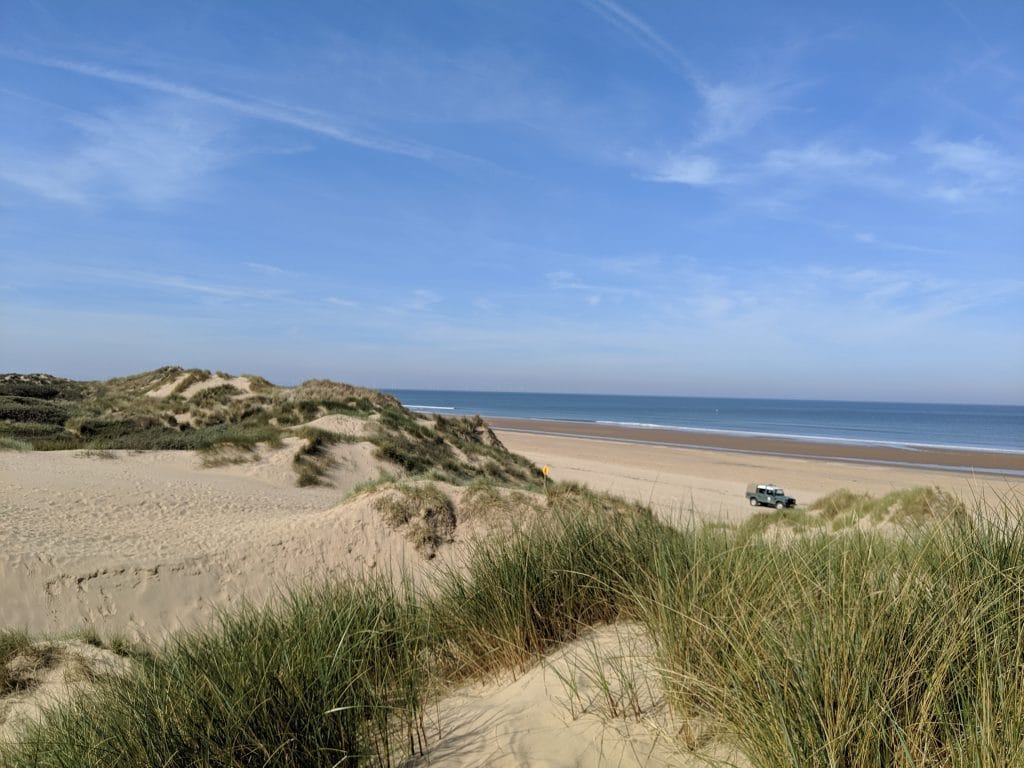
A Changing Coastal Zone
Ainsdale marks the point where the coast shifts from erosion‑dominated to accretion‑dominated conditions.
North of Formby, greater quantities of sand are retained on the upper beach. This allows dunes at Ainsdale to build seaward over time, creating an expanding dune system. The shift is driven by changes in sediment supply and coastal orientation, which encourage sand accumulation rather than continual retreat
A Dynamic but Sensitive Landscape
Despite growth, Ainsdale’s dunes are highly vulnerable to disturbance.
Recreational pressure reduces vegetation cover, particularly stabilising species such as marram grass. When vegetation is lost, wind can more easily lift sand from the surface, creating or enlarging blowouts. Although blowouts are a natural part of dune systems, extensive or rapidly expanding ones can fragment habitats, increase sand movement and bury vegetation, paths and infrastructure.
Balancing Natural Processes and Visitor Use
Management focuses on protecting habitats while allowing natural sand movement to continue.
Excessive sand mobility can prevent the formation of continuous dune corridors that help species move along the coast. For this reason, management at Ainsdale aims to balance natural dynamism with the need to reduce damage from heavy visitor use. Measures such as access control, seasonal restrictions and targeted vegetation recovery help contain large blowouts while retaining smaller areas of bare sand that support dune specialist species.