
Invertebrates
Merseyside BioBank has listed over 3500 insects for the Sefton Coast sand-dunes dozens of new ones being added each year (Smith, 2023).
The dunes are particularly rich in ants, bees and wasps (aculeate Hymenoptera), many being entirely restricted to this habitat in Lancashire and North Merseyside (Hargreaves & White, 2021). Flies (Diptera), moths (Lepidoptera) and beetles (Coleoptera) are also especially diverse.
Most of the recently added species have moved north in response to warming temperatures, one example being the largest British hoverfly, Volucella zonaria (Hornet Plumehorn).
This spectacular insect reached Merseyside in 2015 and is now regularly seen along the coast.
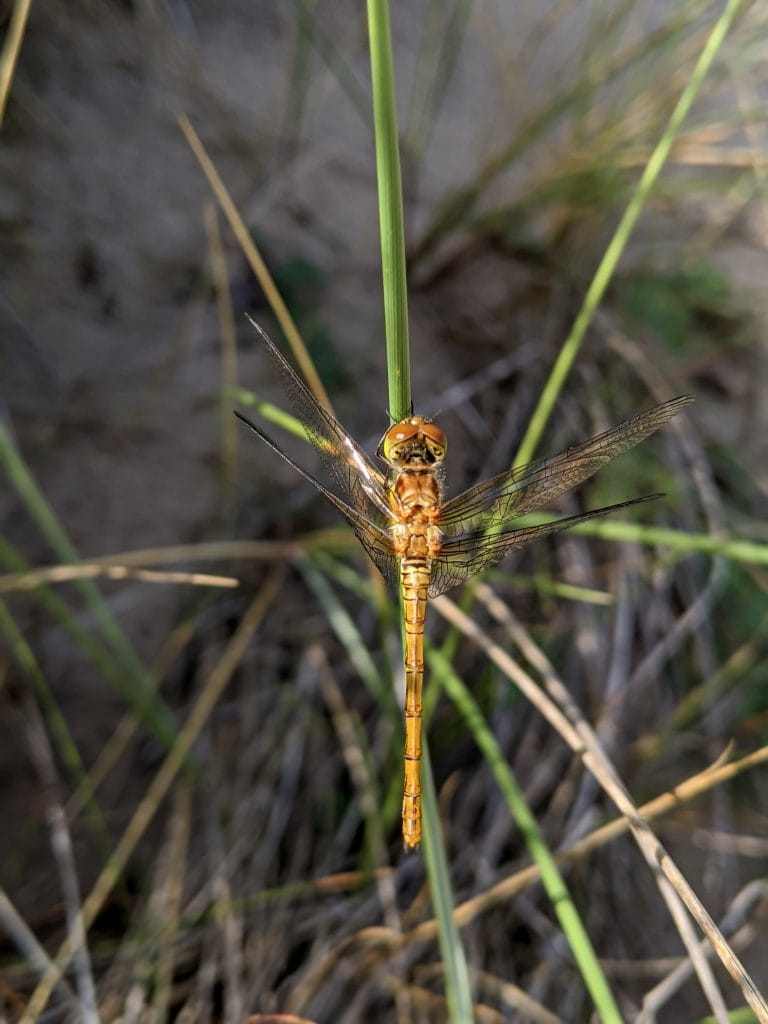
The number of dragonflies (Odonata) recorded for the dunes has more than doubled since the mid-1970s, this being mainly due to southern species extending their distributions northwards (Smith, 2023).
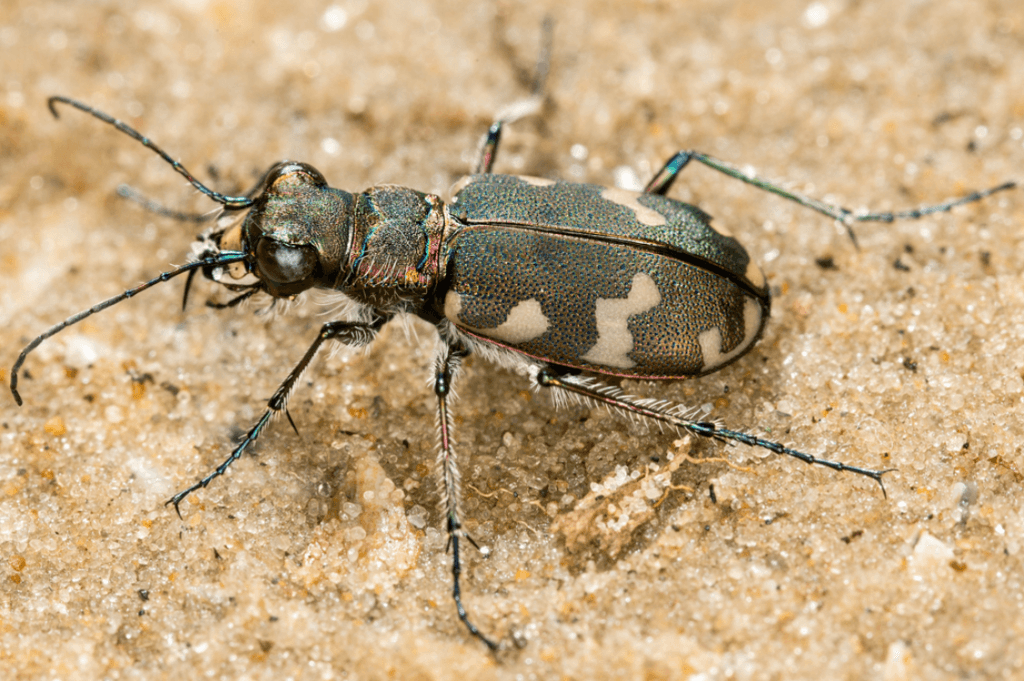
One of the most important Sefton Coast insects is the Northern Dune Tiger Beetle (Cicindela hybrida), with only two British localities.
This Section 41, Red-listed ‘vulnerable’ species is wholly dependent on bare sand for basking and breeding. It can be abundant on suitable habitat, such as the southern sections of the Green Beach and the Devil’s Hole but is extremely susceptible to vegetation overgrowth (Smith, 2011).
Related Strategy and Resources